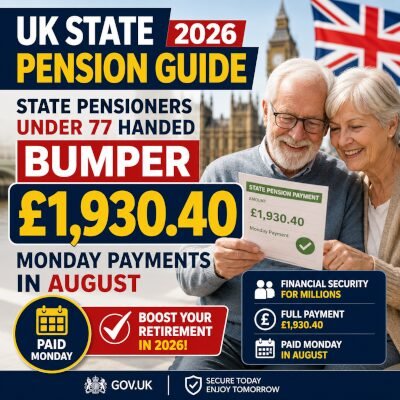
UK State Pension Guide 2026: State pensioners under 77 handed bumper £1,930.40 Monday payments in August

Insurance Guide United Kingdom: UK State pension guide for those under 77 can get £1,930.40 paid out to them from the DWP in August. Eligible retirees across the United Kingdom are set for a financial boost this month as the Department for Work and Pensions (DWP) schedule aligns to deliver two full four-week state pension payments within a single calendar month. For younger state pensioners—specifically those under the age of 77 who claim the New State Pension introduced in April 2016—this calendar alignment results in a total combined payout of up to £1,930.40 in August.
Understanding the mechanics behind DWP payment cycles, National Insurance routing codes, and the post-2016 pension framework helps explain how this payment schedule operates and what it means for household budgeting.
Executive Summary: The August Double Payment Breakdown
The UK State Pension is not administered on a standard monthly calendar date. Instead, the DWP operates on a strict four-week payment cycle. Because a calendar year contains 52 weeks—equivalent to 13 four-week cycles rather than 12—certain months contain five occurrences of a specific weekday.
When a calendar month begins on or near a Monday, pensioners whose payment day falls on Monday receive two separate four-week transfers within that same calendar month.
                  AUGUST PAYMENT CYCLE ALIGNMENT
┌───────────────────────────────────────────────────────────────┐
│ PAYMENT 1: First Monday of August                            │
│  └─ Covers preceding 4-week period: £965.20                   │
├───────────────────────────────────────────────────────────────┤
│ PAYMENT 2: Final Monday / Bank Holiday Adjusted Date          │
│  └─ Covers subsequent 4-week period: £965.20                  │
├───────────────────────────────────────────────────────────────┤
│ TOTAL AUGUST DWP DISBURSEMENT: £1,930.40                     │
└───────────────────────────────────────────────────────────────┘
Why “Under 77” State Pensioners Receive £1,930.40
The difference in payout amounts stems from the major UK pension reform enacted on 6 April 2016, which split state pension recipients into two distinct categories based on age:
-
New State Pension (Post-April 2016): Applies to women born on or after 6 April 1953 and men born on or after 6 April 1951. In 2026, anyone who reached state pension age after April 2016 is currently aged 76 or younger (under 77).
-
Basic State Pension (Pre-April 2016): Applies to retirees who reached state pension age before 6 April 2016 (currently aged 77 or older).
Financial Rate Comparison
Following the recent 4.8% Triple Lock increase, weekly rates for full entitlement stand as follows:
| Pension Category | Age Demographic | Weekly Rate | 4-Week Cycle Rate | Two Payments in 1 Month |
| New State Pension | Under 77 (Post-April 2016) | £241.30 | £965.20 | £1,930.40 |
| Basic State Pension | 77 and Older (Pre-April 2016) | £184.90 | £739.60 | £1,479.20 |
To calculate the double-payment total for a full New State Pension claimant:
Note: Older state pensioners on the pre-2016 scheme receive a lower basic weekly sum (£184.90), yielding £1,479.20 across two August payments. However, many older pensioners receive additional earnings-related top-ups—such as the State Second Pension (S2P) or SERPS—which can bring their total income closer to or above the New State Pension rate.
How National Insurance Numbers Determine Your Payment Day
The DWP assigns state pension payment weekdays according to the last two digits of the claimant’s National Insurance (NI) number.
          NATIONAL INSURANCE CODE ROUTING MATRIX
┌──────────────────────────────┬──────────────────────────────┐
│ Last 2 Digits of NI Number   │ Assigned DWP Payment Day     │
├──────────────────────────────┼──────────────────────────────┤
│ 00 to 19                     │ Monday                       │
│ 20 to 39                     │ Tuesday                      │
│ 40 to 59                     │ Wednesday                    │
│ 60 to 79                     │ Thursday                     │
│ 80 to 99                     │ Friday                       │
└──────────────────────────────┴──────────────────────────────┘
Pensioners whose National Insurance number ends in 00 through 19 are scheduled for Monday payments. Consequently, whenever August features two payment dates landing on Mondays (or adjusted Friday dates due to bank holidays), this group sees two deposits within the month.
Bank Holiday Adjustments: Summer Bank Holiday Impact
An essential factor in August payment scheduling is the Summer Bank Holiday (falling on the last Monday of August in England, Wales, and Northern Ireland).
Under official DWP protocol:
-
If a payment date falls on a public bank holiday, the DWP automatically processes the deposit on the first preceding business day.
-
For Monday bank holiday dates, payments are credited to bank accounts on the preceding Friday.
               BANK HOLIDAY ADJUSTMENT TIMELINE
┌─────────────────────────────────────────────────────────────┐
│ Scheduled Date: Summer Bank Holiday Monday                  │
│                                                             │
│ Actual DWP Deposit Date: Preceding Business Friday          │
│                                                             │
│ Impact: Funds land earlier in bank accounts without fee/loss │
└─────────────────────────────────────────────────────────────┘
This adjustment ensures retirees maintain unbroken access to funds without delay over long weekends.
Technical Analysis overview
A common point of confusion among retirees is whether two payments in August represent “extra” or “bonus” money from the government. From an accounting standpoint, it is a matter of calendar distribution rather than additional funding.
Because the DWP disburses funds every 28 days (4 weeks), the annual timeline divides as follows:
Since calendar years consist of 12 months, one calendar month every year will inevitably capture two payment cycles for any given weekday group. While August provides a double payment of £1,930.40, the following month (September) will revert to a single four-week cycle payout of £965.20.
                      ANNUAL CASH FLOW CYCLE
┌─────────────────────────────────────────────────────────────┐
│ Standard Months (11 months)  ──>  1 Payment = £965.20 / mo   │
│ Dual-Payment Month (1 month) ──>  2 Payments = £1,930.40 / mo│
├─────────────────────────────────────────────────────────────┤
│ ANNUAL TOTAL (13 x £965.20)  ──>  £12,547.60 / year          │
└─────────────────────────────────────────────────────────────┘
How is the tax process?
With the full New State Pension rising to £241.30 per week (£12,547.60 annually) following the 4.8% Triple Lock boost, state pension income now sits just £22.40 below the frozen Personal Allowance threshold of £12,570.
              TAX THRESHOLD PROXIMITY ANALYSIS
┌─────────────────────────────────────────────────────────────┐
│ Personal Income Tax Allowance Threshold : £12,570.00         │
│ Full Annual New State Pension (2026)     : £12,547.60         │
├─────────────────────────────────────────────────────────────┤
│ REMAINING TAX-FREE BUFFER                : £22.40 / year    │
└─────────────────────────────────────────────────────────────┘
What to know?
-
Private or Workplace Pension Income: Pensioners receiving even small private pensions, occupational payouts, or part-time earnings that total more than £22.40 per year above their State Pension will cross into the 20% Basic Rate tax bracket.
-
PAYE Adjustments: His Majesty’s Revenue and Customs (HMRC) typically collects tax owed on state pension income by adjusting the tax code applied to private pensions or employment income, rather than deducting tax directly from DWP payments.
-
No Direct Tax Deductions on DWP Payments: The £1,930.40 disbursed by the DWP in August is paid gross without tax deductions at the point of transfer.
How to Verifying Your Payment Schedule
To confirm your exact payment dates and ensure your bank details are up to date, follow this checklist:
-
Check Your National Insurance Number: Look at the last two digits on your NI card, P60, or tax letters to confirm your assigned payment day.
-
Review Bank Statements: Look for deposits labeled “DWP SP” (Department for Work and Pensions State Pension).
-
Verify Full Entitlement: Check your official state pension forecast via GOV.UK to verify whether you hold the 35 qualifying National Insurance years required for the maximum £241.30 weekly rate.
-
Adjust Household Budgets: Remember that a double payment in August means September will return to the standard single four-week payment schedule.