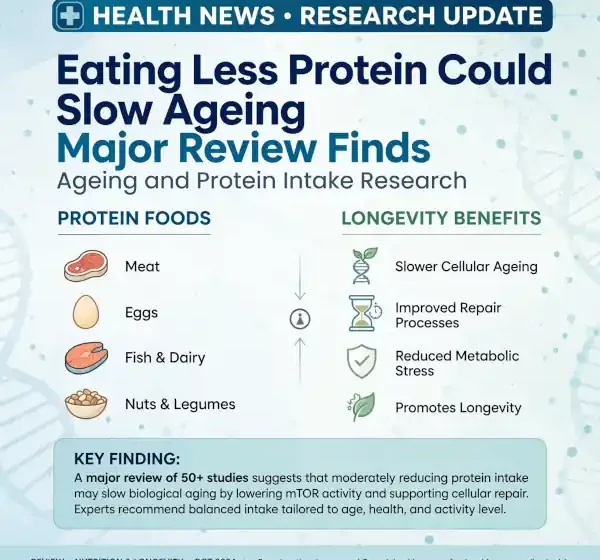
Eating Less Protein Could Slow Ageing, Major Review Finds: Ageing and Protein Intake Research Explored

In an era where grocery shelves are dominated by protein-fortified snacks, cereals, water, and fitness shakes, a landmark scientific analysis suggests the modern “protein boom” may be overselling what the human body actually requires.
A sweeping review of more than 350 studies examines the direct relationship between ageing and protein intake research, finding that eating less protein—rather than more—could significantly improve metabolic health, limit cellular damage, reduce systemic inflammation, and activate biological pathways linked to healthier ageing and extended lifespan.
Published in the Cell Press journal Cell Press Blue, the comprehensive study highlights a growing paradox in public health: while dietary guidance and popular wellness trends urge consumers to maximise macronutrient intake, high protein consumption among sedentary adults may inadvertently accelerate biological ageing processes.
Quality of Life vs. Quantity of Consumption
For decades, longevity researchers have understood that severe calorie restriction can extend lifespan and decrease age-related disease risks, such as cancer and diabetes. However, adhering to chronic low-calorie diets is practically unsustainable for most humans.
The new aging and protein intake research demonstrates that protein restriction (PR) offers a far more manageable pathway. Studies on flies, rodents, and human clinical trials show that reducing dietary protein intake can deliver similar metabolic and anti-ageing benefits—even without cutting overall calories.
In human clinical trials analysed in the review, protein-restricted participants experienced:
- Improved fasting blood sugar levels and insulin sensitivity.
- Reductions in body weight and overall fat mass.
- Decreased cellular stress and lower systemic inflammation markers.
- Optimisation of cellular nutrient-sensing machinery.
How Protein Restriction Slows Cellular Ageing
The review outlines several recurring biological pathways that explain how limiting protein intake directly influences cellular repair mechanisms and longevity:
High Protein Intake (Without Exercise) ➔ mTOR Pathway Activation ➔ Accelerated Cellular Damage & Turnover ➔ Faster Biological Aging
Low/Moderate Protein Intake ➔ Increased FGF21 Hormone Release ➔ Enhanced Metabolic Function ➔ Slower Cellular Damage & Longevity
1. Upregulation of Longevity Hormone FGF21
A primary key driver identified in the review is Fibroblast Growth Factor 21 (FGF21), a metabolic hormone that rises sharply when dietary protein is restricted. Higher circulating levels of FGF21 trigger increased energy expenditure, optimise glucose regulation, and reduce chronic tissue inflammation. Animal models with persistently elevated FGF21 levels consistently demonstrate significant lifespan extensions.
2. mTOR Signaling and Cellular Turnover
Consuming high amounts of certain amino acids—particularly essential branched-chain amino acids (BCAAs) like leucine, isoleucine, and valine—keeps the body’s mTOR (mechanistic target of rapamycin) pathway perpetually activated. While mTOR activation is essential for muscle building, its constant overstimulation in non-athletes suppresses autophagy (the cell’s internal cleanup mechanism), leading to accumulated cellular damage over time.
Sedentary Lifestyle vs. Physical Activity: The Critical Divide
Corresponding author Dudley Lamming, a longevity researcher at the University of Wisconsin–Madison, emphasises that context is everything when evaluating ageing and protein intake research:
“It’s absolutely crystal clear that there are benefits of protein to muscle growth and exercise response of active individuals,” says Lamming. “But because most people are relatively sedentary, many people are likely consuming more protein than they actually need, which probably has negative health consequences.”
When an active individual exercises, incoming amino acids are utilized productively to repair and rebuild skeletal muscle tissue. Conversely, in a sedentary body, surplus amino acids cannot be properly utilized for muscle synthesis and instead accelerate cell turnover, creating molecular and cellular stress that accelerates biological aging.
Daily Recommendations & Target Demographics
The updated findings highlight the necessity of personalising dietary protein intake based on activity level, biological age, and overall health status:
| Population Category | Primary Nutritional Goal | Recommended Protein Focus |
| Sedentary Adults | Slowing cellular aging & metabolic protection | Moderate to lower protein intake; avoid protein-fortified processed foods. |
| Athletes & Active Adults | Muscle repair, synthesis & athletic recovery | Higher protein intake matched with resistance training and exercise. |
| Older Adults (Frailty Risk) | Sarcopenia prevention & structural maintenance | Targeted moderate-high protein paired with mild strength training. |
| Pregnant Women | Fetal tissue growth & maternal development | Higher physiological protein requirements. |
Frequently Asked Questions (FAQs)
Does this review mean everyone should stop eating protein?
No. Protein remains an essential macronutrient required for biological survival, enzyme production, and structural integrity. The research warns against unnecessary overconsumption—particularly from processed, protein-fortified junk foods—among non-active populations.
How does protein restriction differ from calorie restriction?
Calorie restriction requires cutting overall food intake, which can lead to constant hunger and difficulty sustaining long-term compliance. Protein restriction simply involves adjusting the macro ratio—eating fewer protein-dense foods while maintaining adequate calorie levels through whole carbohydrates and healthy fats.
Why are protein needs different for older adults?
Older individuals often develop anabolic resistance, meaning their bodies process protein less efficiently to maintain muscle mass. For this reason, specific elderly populations facing sarcopenia (age-related muscle loss) may still require higher protein intake, ideally combined with resistance exercises.