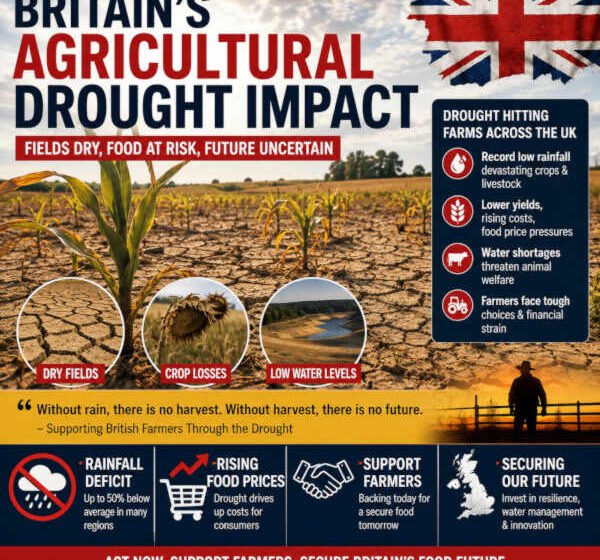
Britain Agricultural Drought Impact: Britain Could Face Food Shortages as Drought Continues, Farmers Warn

Top breaming updates: In the latest UK news, we have Britain Agricultural Drought Impact: Food Shortages Loom as Heatwave Threatens Harvest: Britain is facing potential shortages of staple produce following a severe drought across major growing regions in England. The National Farmers’ Union (NFU) has warned that continuing heatwaves and rainfall deficits are jeopardizing domestic food production, forcing the industry to adapt to what is being called the “new normal” for British agriculture.
The UK Health Security Agency (UKHSA) has issued heat-health alerts across eight English regions, with temperatures exceeding 30°C. These high temperatures, combined with water extraction restrictions, are compounding the challenges for a farming sector that previously suffered from widespread winter flooding.
Initial Stunting Harvest on Record and Boom Yields
Data from the Agriculture and Horticulture Development Board (AHDB) confirms that extreme heat has triggered the earliest harvest since records began in 2006.
-
Timeline Shift: In the south and east of England, harvesting is progressing two to three weeks ahead of long-term averages.
-
Night Operations: Farmers are running machinery overnight to avoid peak daytime heat and lower the risk of field fires.
-
Reduced Stature: Wheat crops in heavily affected zones are reaching only half their typical height, with overall cereal yields falling significantly below the 10-year average.
“Across much of the UK, combines have been rolling earlier than usual this year, with many farmers working through the night to avoid the most extreme daytime temperatures. Cereal yields have generally been below the 10-year average so far, with some farms experiencing significant reductions.”
— Anthony Hopkins, AHDB Director of Cereals & Oilseeds
weather Stress and Water finding lacking behind
Provisional figures from the Met Office indicate that England received approximately 8% of its average rainfall during July, placing it among the driest Julys on record. Over 23 million people across England and Wales are currently subject to hosepipe bans, while dry conditions have fueled wildfires in eastern counties like Suffolk.
                 JULY RAINFALL DEFICIT IN ENGLAND
┌─────────────────────────────────────────────────────────────┐
│ Actual Rainfall Received:        [██] 8%                    │
│ Historical Average Deficit:      [────────────────────────] │
└─────────────────────────────────────────────────────────────┘
NFU President Tom Bradshaw highlighted that international import options may also face pressure, as major exporting nations experience similar climate-driven weather events.
“Those other countries around the world that we currently rely on to produce our food and vegetables, their climates are changing as well. It does feel like there is going to be some shortages of food products… Let’s draw a line in the sand and make sure we prioritize domestic food production to deliver growth across the UK.”
— Tom Bradshaw, NFU President
To strengthen long-term water security, the NFU is calling on the government to introduce tax incentives that would help agricultural businesses build on-farm water storage reservoirs.
UKHSA Heat-Health Alerts
The UK Health Security Agency (UKHSA) has updated its alert system to warn of heightened public health and operational risks:
| Alert Status | Regions Affected | Active Window |
| Amber Alert | East Midlands, East of England, South-East, London | Monday morning – Wednesday morning |
| Yellow Alert | North-West, Yorkshire & the Humber, West Midlands, South-West | Monday morning – Wednesday morning |
Economic impacts
The combination of crop loss, elevated energy costs, and reduced water availability is increasing financial pressure across the agricultural sector.
               AGRICULTURAL RESILIENCE CONSIDERATIONS
┌───────────────────────────────────────────────────────────────┐
│ CROP LOSS RISK: Yield reductions for wheat, barley, and veg   │
├───────────────────────────────────────────────────────────────┤
│ INFRASTRUCTURE NEEDS: Investments in storage reservoirs        │
├───────────────────────────────────────────────────────────────┤
│ FINANCIAL STRAIN: Reduced yields following winter floods      │
└───────────────────────────────────────────────────────────────┘
Industry groups, including the Country Land and Business Association (CLA), note that an increasing number of farm businesses are struggling to break even after consecutive years of extreme weather. Representatives are advocating for targeted policy measures, including capital allowances for water infrastructure, enhanced drought planning, and risk management tools to help preserve domestic supply chains.
Frequently Asked Questions (FAQs)
What is driving the British agricultural drought impact in 2026?
A combination of record-low July rainfall, consecutive summer heatwaves, and irrigation restrictions following a wet winter has severely disrupted crop development across England.
How early is the 2026 UK harvest?
According to the AHDB, the 2026 harvest is the earliest recorded since 2006, with combining operations starting two to three weeks ahead of the long-term average in southern and eastern regions.
What measures are farming organisations requesting from the government?
The NFU and CLA are advocating for tax breaks and capital allowances for on-farm water storage reservoirs, strategic drought planning, and policy frameworks that prioritise domestic food production.
Which crops are most affected by the dry conditions?
Cereal crops like wheat and barley have seen significant height and yield reductions. Field vegetables requiring regular irrigation, such as carrots, broccoli, and leafy greens, are also experiencing lower yields.